Whenever someone said they caught a fish, I would rush out to buy that lure. After watching explosive fishing videos on YouTube, I instantly wanted whatever they were using. That was exactly me in the past. Staring at the shelves in the tackle shop, harboring faint hopes like “Maybe I can catch one with this,” and before I knew it, my lure box was packed. But the results didn’t follow. Total failure!
Why couldn’t I catch anything? Now, I know the answer clearly. It was because the most important core—my own thinking and strategy—was completely missing. Ignoring tidal currents and tackle balance, I was just swallowed by the waves of information.
However, after spending countless days on the waters of Shakotan and gaining real fishing experience, I finally started to see my own strategy and how to choose lures. In this article, I will introduce the realistic mindset for tuna casting that I learned the hard way through many failures, along with my frontline arsenal of lures that have survived countless battles.
- Past Self Swayed by Information and Finding My Own Axis
- Knowing the Local Waters Inside Out: The Strategy of Picking Up Single Boils
- My Current First-String Lures and Commitment to the Topwater Game
- 3 Common Mistake Patterns Beginners Fall Into
- The Philosophy of Lure Rotation
- To the Next Dimension: The Potential and Challenge of Sinking Lures
- In Conclusion
Past Self Swayed by Information and Finding My Own Axis
ANSWER
The reason you can’t catch tuna just by buying lures based on internet catch reports is that they don’t match your tackle or the specific conditions of your local waters (like Shakotan). The first step to getting results is not to imitate others, but to have your own core thinking—asking “why does this work in this area?”—and learning from local standard lures like the Feed Popper.
Why I Couldn’t Catch Fish Even After Buying Up “Hit Lures”
Looking back, whenever I heard someone caught something, I bought it; whenever I saw it on YouTube, I wanted it. The biggest cause was that I hadn’t formed my own ideas.
Opening the internet, you see “I caught it with this!” flying around almost every day. Hit by that heat, your purse strings naturally loosen. It’s the nature of an angler. A reaction bite, if you will.
However, someone else’s hit lure doesn’t necessarily match your tackle or the waters you frequent. At the time, I wasn’t making choices based on the situation at hand; I was just casting lures relying purely on the rumor that “this one catches fish.” There was no way I’d get results like that.
From there, through researching various sources and repeating actual fishing, I feel my own philosophy gradually emerged. The unglamorous process of learning from failure was exactly the shortcut that led to a solid catch.
My First Tuna and Tackle House’s Popper
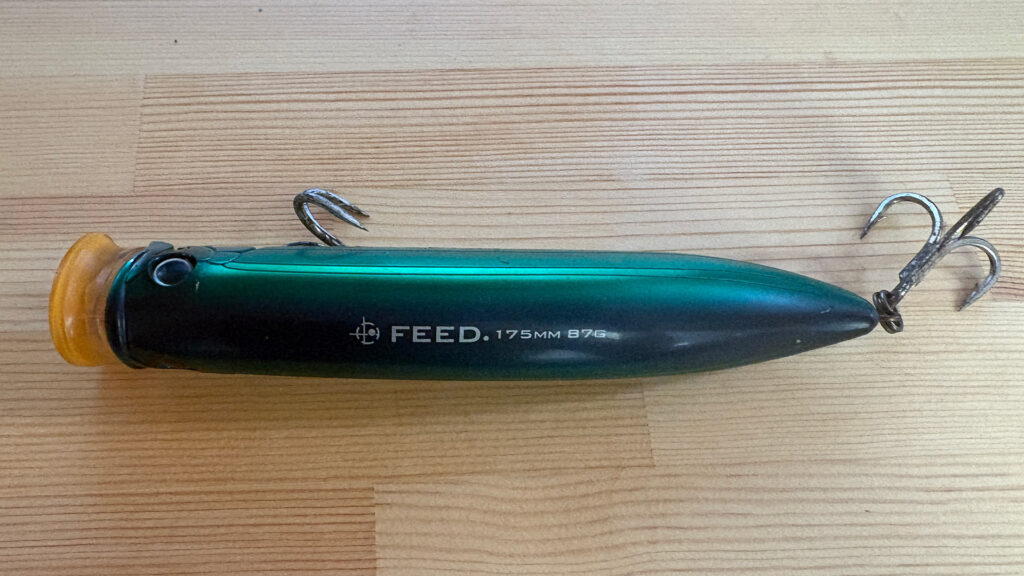
That really made me tremble. The first lure I caught a tuna with was a popper that many anglers in Shakotan were throwing back then: the Tackle House “Feed Popper.” It was so mainstream that probably everyone in Shakotan had one.
I have it displayed as a memorial lure.
Riding that wave, I too experienced the intense pull of a tuna. That torquey run, the violent sense of life transmitted through the rod. In that moment, I was completely captivated by tuna.
By using the absolute standard local lure that other anglers were getting results with, I was naturally making an approach suited for that specific ocean area. It was the one lure that gave me the opportunity to think “why is this effective here?” instead of just being swayed by information. Although, at the time, my thinking was still very shallow.
Knowing the Local Waters Inside Out: The Strategy of Picking Up Single Boils
What’s More Important Than Chasing Feeding Frenzies
Once out on the ocean, it’s basically the standard to look for flashy feeding frenzies (boils), but that seems like the right answer while actually not being the whole truth. The points where boils frequently occur are often fixed. This is because these points are places where baitfish naturally gather.
A local fisherman once told me, “Go here at this time.” Strangely enough, a feeding frenzy would happen in that specific area at that specific time. It’s truly amazing, and I am deeply grateful for their years of experience. If you know this, waiting nearby highly increases your chances of encountering a boil.
It seems that advice has been passed down for many years. It is information inherited by generations of fishermen for tuna, Atka mackerel, squid, and shrimp.
Once you know the area and can confirm the presence of tuna, don’t you feel like you can manage something? There are many things you can do with single surface busts without forcefully chasing down big frenzies.
Will you wait for a frenzy to occur in the vast ocean and chase it, or waste time chasing distant flocks of birds? Do not miss a single splash or the slightest change on the water’s surface, and accurately shoot the right lure right there. Observe the ocean without rushing, and predict the tuna’s direction of travel. This is my current style.
Reading the Tide: The Home Ground Advantage
What is indispensable for making this single-shot strategy work is the ability to read the tide. If you understand the tidal currents, your chances will increase even more. For my local home waters, I generally know how it moves.
Because it is my home ground where I understand the seabed topography and how the tides collide, I can see the routes where tuna corner their prey. That gives me the confidence that I can win a fight right here.
For example, the best condition characterized by rising catch rates is when the outgoing tide matches the wind direction.
However, this doesn’t apply unless you know the area well, so it’s difficult in new waters. Not imitating others, but understanding the ocean by going there yourself on your own two feet. This becomes your most powerful weapon.
My Current First-String Lures and Commitment to the Topwater Game
The Orange Floating Squadron I Fight Alongside
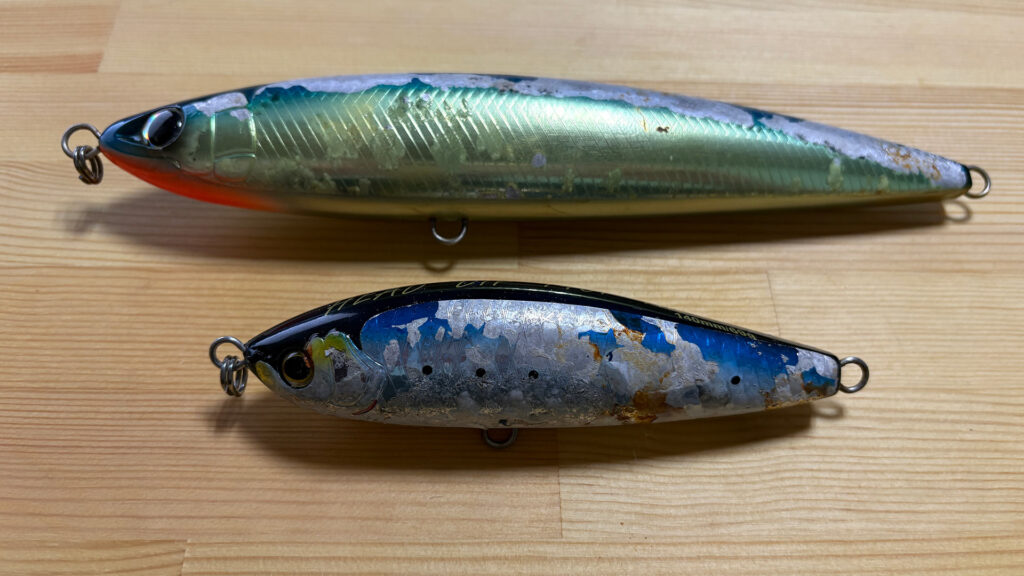
These are the weapons I’ve fought alongside until now. Just a part of them (laughs).
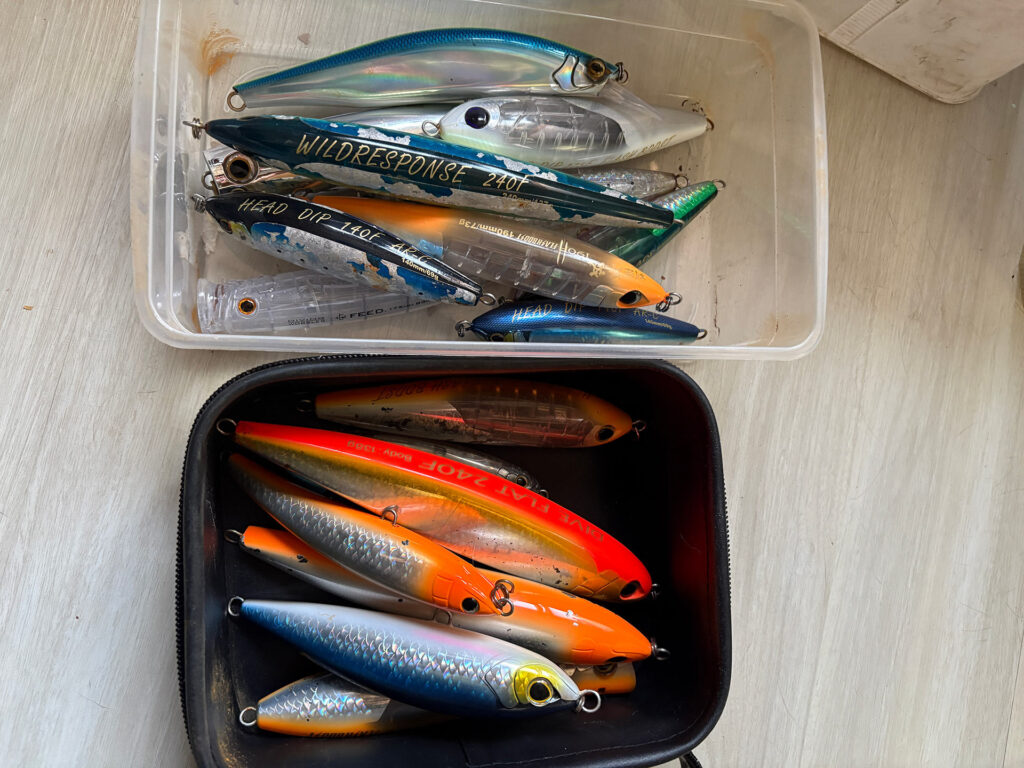
Floating lures are rarely lost, so they keep their battle records. The bodies, battered with tooth marks, are like medals of honor we earned fighting together. I keep the memorial ones displayed in my room. Looking at them brings back memories of those days. Spending time gazing at these lures is a very comfortable moment for me.
Why I Believe in and Keep Casting 200mm+ Lures
I have finally found my own correct answer for choosing lure sizes. Lately, I cast lures averaging over 200mm. The tackle I currently own leans a bit heavy, so larger lures just fit better.
If you ignore tackle balance and throw a small lure, you won’t get distance, and the action will be dead. A size that puts proper weight on your rod so you can swing through fully—for me right now, that means large plugs over 200mm.
Because the silhouette is large, its appeal to tuna is immense. Having a lure you can believe in and keep casting holds a very significant meaning in the mental game of tuna casting.
3 Common Mistake Patterns Beginners Fall Into
Here, to prevent you from making the same mistakes I did in the past, I will introduce 3 failure patterns that many anglers fall into.
(1) Wasting Time Chasing Feeding Frenzies
When you spot a flashy boil, you naturally want to chase it. However, by the time you arrive, the frenzy has vanished, and the tuna have sunk. You must have experienced this often. Then, you chase the next one. You spend a lot of time running the boat and no time actually fishing.
You need the calmness to predict the tuna’s migration route and get there ahead of them. Chasing them in a panic only wastes fuel and time. Sometimes, you just need to wait patiently.
(2) Ignoring Tackle Balance and Throwing Small Lures
Assuming “smaller lures are easier to handle” and pairing a lightweight lure with heavy tackle. This is completely counterproductive.
You can’t utilize the rod’s repulsion, so you get no casting distance. The lure might flutter in the air, the action becomes unnatural, and the tuna will completely see through it. Choose a lure weight that matches your tackle. This is the shortest route to good catches.
(3) Simply Copying Someone Else’s Hit Lure
Seeing “I caught it with this!” info on SNS or YouTube and immediately rushing to buy the same lure. This was exactly me in the past.
However, when the tidal currents, water temperature, bait types, and tackle settings of the area where it was caught are all different, there is no point in just copying the lure. What is important is the thinking ability to ask “why did that lure catch fish?”
The Philosophy of Lure Rotation
In tuna casting, lure rotation is incredibly important. However, changing lures blindly has no meaning.
How to Judge When There is No Reaction on Topwater (Floating)
You keep throwing topwater plugs but get no reaction. What do you do in that situation?
In my case, if I can confirm the presence of tuna by single splashes or bird movements, I change the quality of the action before changing the color or size of the lure. If there is still no reaction, I suspect the tuna might be underwater and consider switching to a sinking lure.
The quality of the boil is also important. If big columns of water aren’t erupting, it often means the tuna are catching their prey easily, and you can judge that the baitfish’s swimming ability is weak. If violent columns of water are rising, the bait is fast and the tuna are desperately chasing them, causing larger splashes. You can make various judgments just from one boil.
The best thing is being able to confirm the actual baitfish, making it much more realistic. As an aside, live bait catches them easily. Just drifting live bait in their migration route will normally catch them. If you leave the rod in a holder with a bell, the bell will suddenly ring. However, whether that is interesting as “fishing” is up to the individual.
When to Switch to Sinking Lures
Boils that don’t break the surface, or schools that are sinking. In these situations, it’s time for sinking lures.
The difficult part is that there are so many uncertain factors, like having to search blindly to find out what depth they are at. So, you want to memorize beforehand roughly how many meters this lure sinks per second. You sink it about 30m to 50m and then pull it from there.
The Mental Importance of “Believing in This Lure”
When the fish aren’t biting, you tend to want to change lures frequently. But that is the realm only God knows—sometimes it works, sometimes it doesn’t.
Once I decide on a trusted first-string lure, I will keep throwing it unless there is a drastic change. To draw out the true potential of that lure, it is essential for the angler to believe in the lure and action it carefully.
You change the lure when you change your strategy. Not for a change of mood.
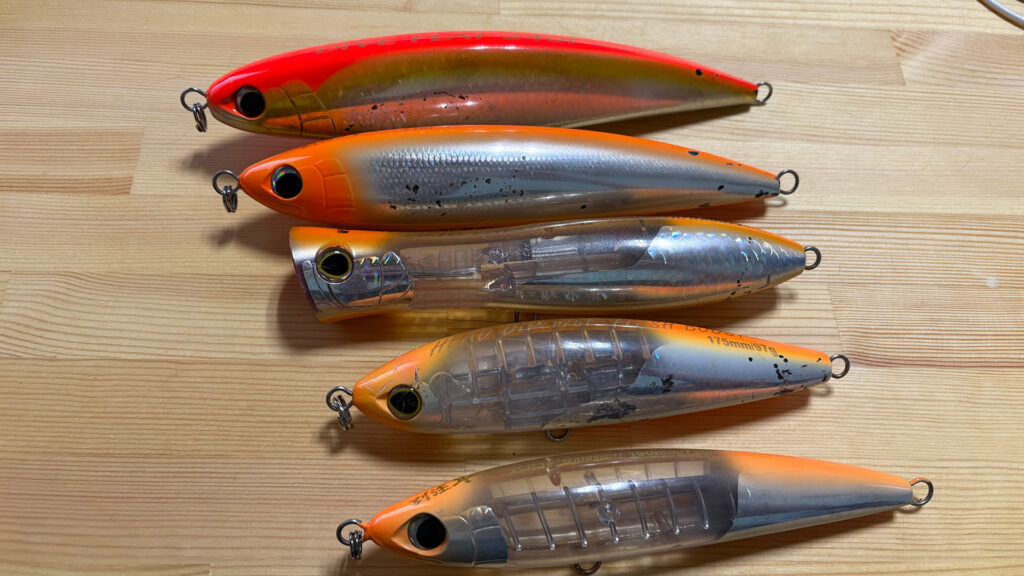
This lineup is my current first-string lures. I haven’t caught anything yet with the Ocea Bluefin Tuna (Betchu Hiramasa) and Dive Flat in the front. The one with the most catches is the second from the bottom, the [Head Dip 175F Flash Boost].
To the Next Dimension: The Potential and Challenge of Sinking Lures
How to Conquer Sinking Boils
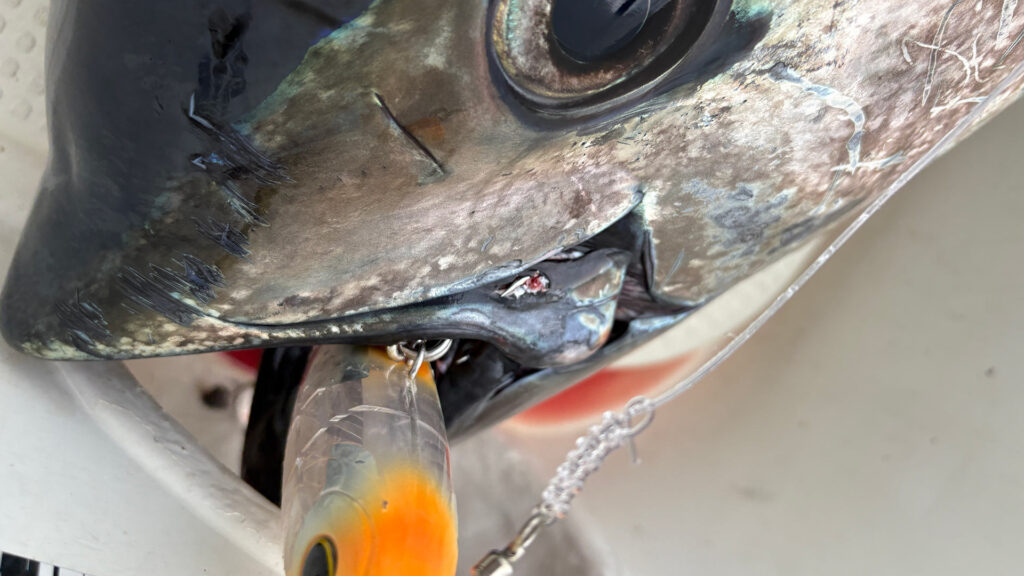
Topwater fishing is undeniably exciting, but the ocean is always changing. Lately, even when a boil happens, they sink immediately, so I want to shoot them down by casting sinking lures; I want to catch them on sinking lures too.
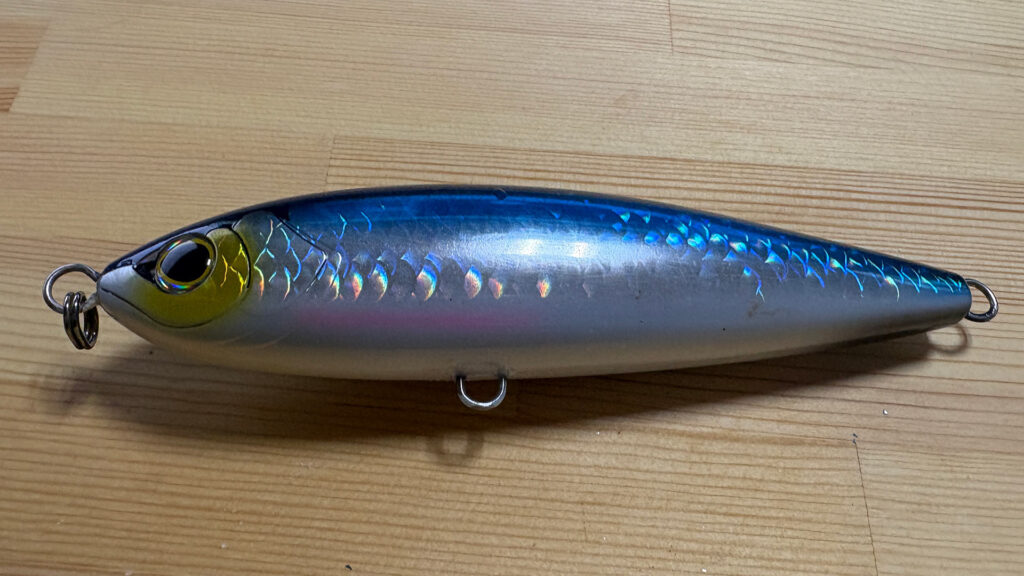
The [Head Dip 175HS] is a heavyweight at 180g, and although it’s meant for GT, I think it will work perfectly fine as a sinking lure, so I have it stashed in my tackle box.
Instead of just waiting for the surface to break, I want to initiate an approach toward the sunken schools. How to drag them out in situations where they won’t fully commit to the top—that is the mission currently assigned to me.
New Partners for a New Challenge
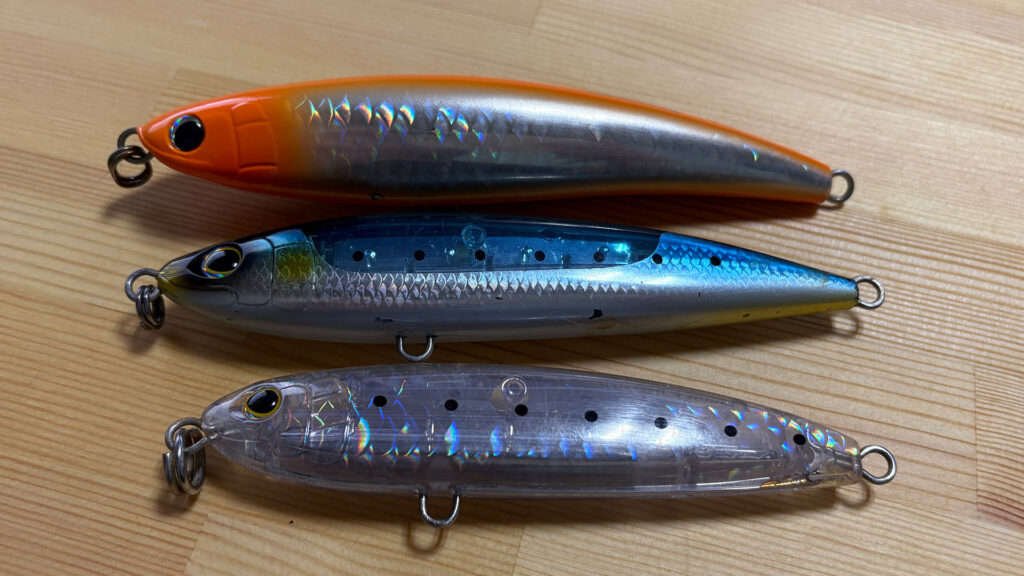
The middle and bottom in the image are the Sardine Ball 150S and 130S. I have tried them a few times so far but haven’t caught anything yet. It’s an unexperienced territory since they will be used in limited situations. So, I’m hoping for just one fish first. I want to know exactly under what conditions they are effective.
Furthermore, since I added an 18000HG reel this year, I’m also thinking about challenging the straits for the over-100kg class. In an unknown ocean area, amidst tremendous raging currents, how far will the strategy I formulated hold up? Just imagining it makes my chest run hot.
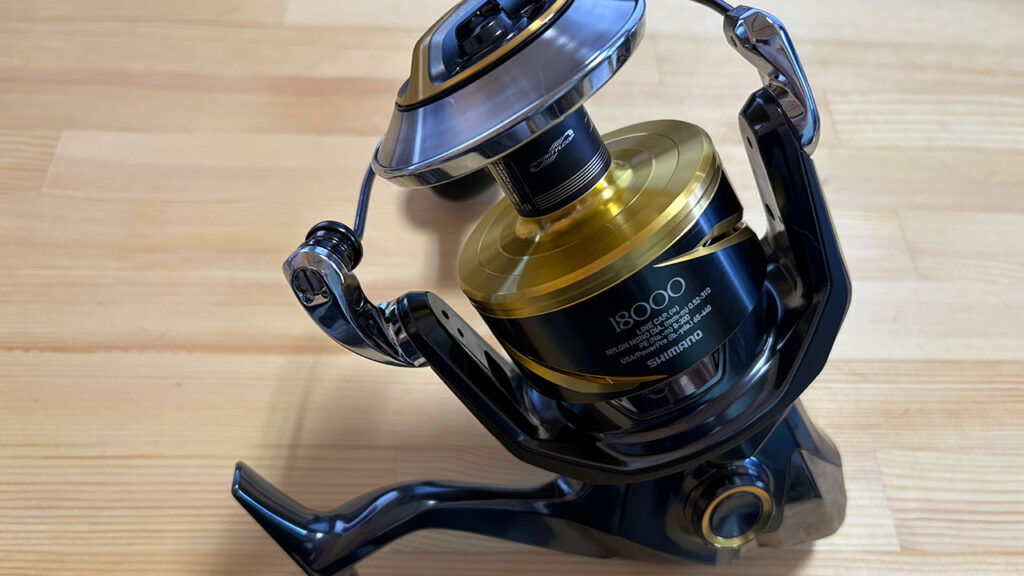
I feel like my own ideas have finally come together. Of course, I have to keep brushing them up. I believe there is still much to be done. I want to become able to produce results even in tough conditions.
In Conclusion
From the old me who bought lures imitating others, to knowing the ocean, knowing my tackle, and becoming able to choose lures I can believe in—it has been quite a long detour. But I can definitively say that it is because of that process that my fishing exists today.
There is no absolute right answer in tuna casting. That is exactly why you think with your own head, put it into practice, sometimes fail spectacularly, and grasp something from it. Stack those experiences one by one, and please enjoy that intense drag sound.
By all means, please put “your own thoughts” onto your lure and cast it as hard as you can.
-
QWhy is it that even if I chase a feeding frenzy in tuna casting, I rarely catch anything?
-
A
Because by the time you spot a boil and chase it down, the tuna have often already sunk. Rather than rushing the boat in a panic, a “single-shot” strategy of waiting by grasping areas where bait gathers based on local experience and tidal currents, and predicting the tuna’s migration route, will save time and more easily lead to a catch.
-
QWhat are common mistakes beginners make when choosing lures for tuna casting?
-
A
Broadly speaking, two points: “ignoring tackle balance” and “copying others.” If you assume “smaller is easier to handle” and pair a light lure with heavy tackle, you get no distance and the action becomes unnatural. Also, even though the caught waters (tide, temp, bait) are different, buying the exact hit lure from SNS or YouTube will result in not catching fish.
-
QIf tuna aren’t coming out on topwater, how should I rotate my lures?
-
A
First, try changing the “quality of the action” before changing the color or size. If there is still no reaction, or if the boil isn’t violent and you judge the tuna are underwater, the logical rotation is not to stick to topwater, but to switch to a sinking lure like the “Head Dip 175HS” and let it sink 30m to 50m before searching.